
What Is That Stain? A Field Guide to Water Marks, Mineral Rings & Mystery Gunk
Red, black, white, green, or somewhere in the color family of "why is my bathroom doing that?" Water stains are clues. Learn what your water may be leaving behind, how to clean the evidence, and when to test before treating.
8 min read · Waterlab Corp Laboratory Staff
A stain is a clue, not a lab result. Color can suggest a cause, but testing is the only dependable way to identify what is in the water and choose treatment that actually fits.
The short answer
Your sink may be keeping better water records than your notebook.
Water stains usually happen when dissolved minerals, metals, or biological growth meet a surface and stay there long enough to make an impression. The same water can look perfectly clear in a glass and still leave a white ring, an orange streak, or a dark smudge after repeated evaporation.
The important distinction is between a visible symptom and a water-quality diagnosis. A red mark may point toward iron, but it does not tell you how much iron is present or whether another issue is tagging along. Consider the stain an invitation to investigate—not a permission slip to buy the first filter advertised with a dramatic before-and-after photo.
The stain field guide
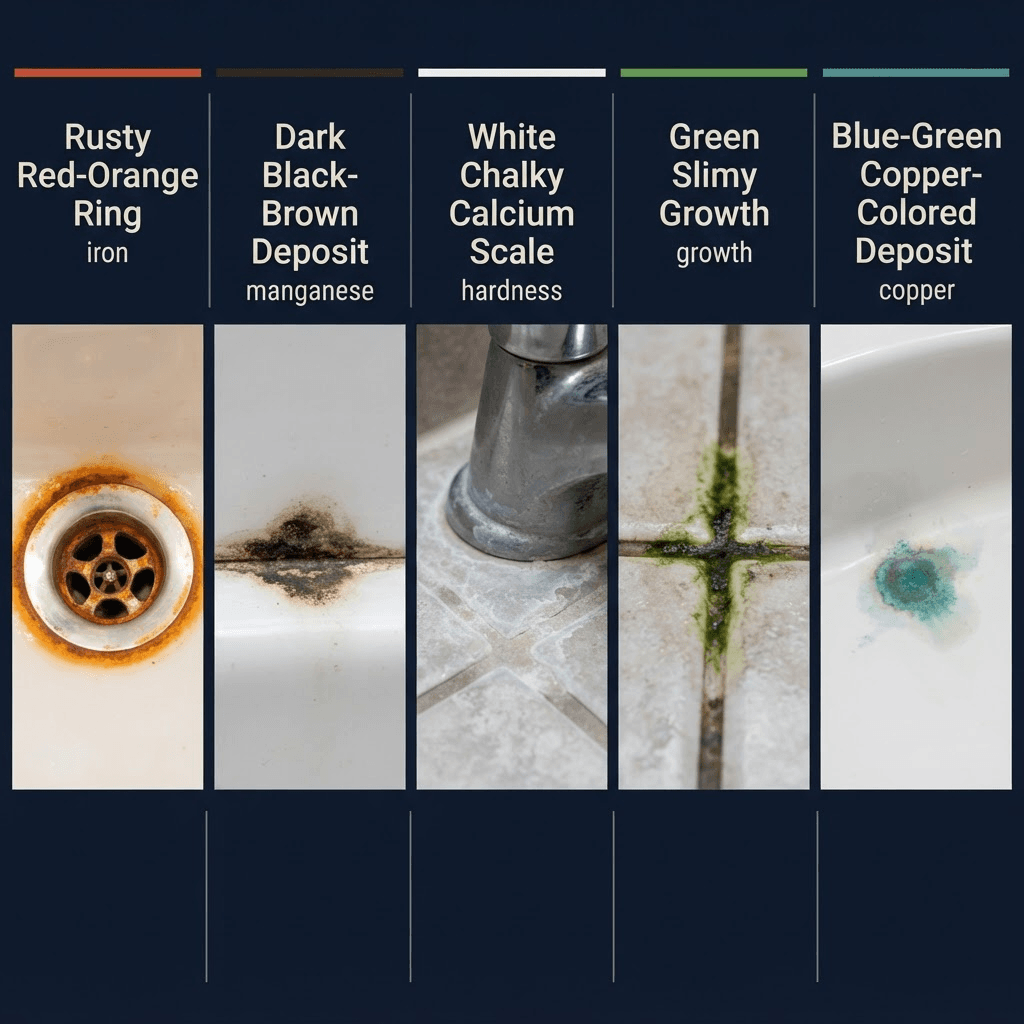
Here are the usual suspects. Water chemistry is not obligated to choose just one, so combinations are possible—especially in private wells and older plumbing systems.
Red, orange, or rusty
Often associated with iron. Dissolved iron can oxidize when it meets air, leaving orange or reddish-brown marks on fixtures, laundry, toilets, and tubs. Iron bacteria can also create slimy deposits or an oily-looking sheen, but color alone cannot confirm bacteria.
Black, brown, or purple
Manganese is a common suspect, especially when the mark is darker than a typical iron stain. It can leave brown-black or nearly black deposits. A dark stain may also be a mix of manganese, sediment, biofilm, or old residue that has been waiting patiently for its close-up.
White, chalky, or crusty
Usually points toward hard water: calcium and magnesium that concentrate as water evaporates. The result is scale on faucets, showerheads, glass, heating elements, and anything else that was hoping to remain shiny.
Green, slimy, or slippery
Green growth can occur where light, moisture, nutrients, and a surface meet—such as tanks, troughs, damp fixtures, or rarely used drains. A slimy deposit may be algae, biofilm, iron bacteria, or a mixture. Bacteria that matter for health are often invisible, so a clean-looking fixture is not proof of safe water.
Blue-green or turquoise
Copper plumbing and acidic or corrosive water can contribute to blue-green deposits, especially around fixtures and drains. The pattern, age of the plumbing, and water pH all matter. If the color is dramatic—or if there are pinhole leaks—test the water and have the plumbing evaluated.
What stains do—and do not—tell you
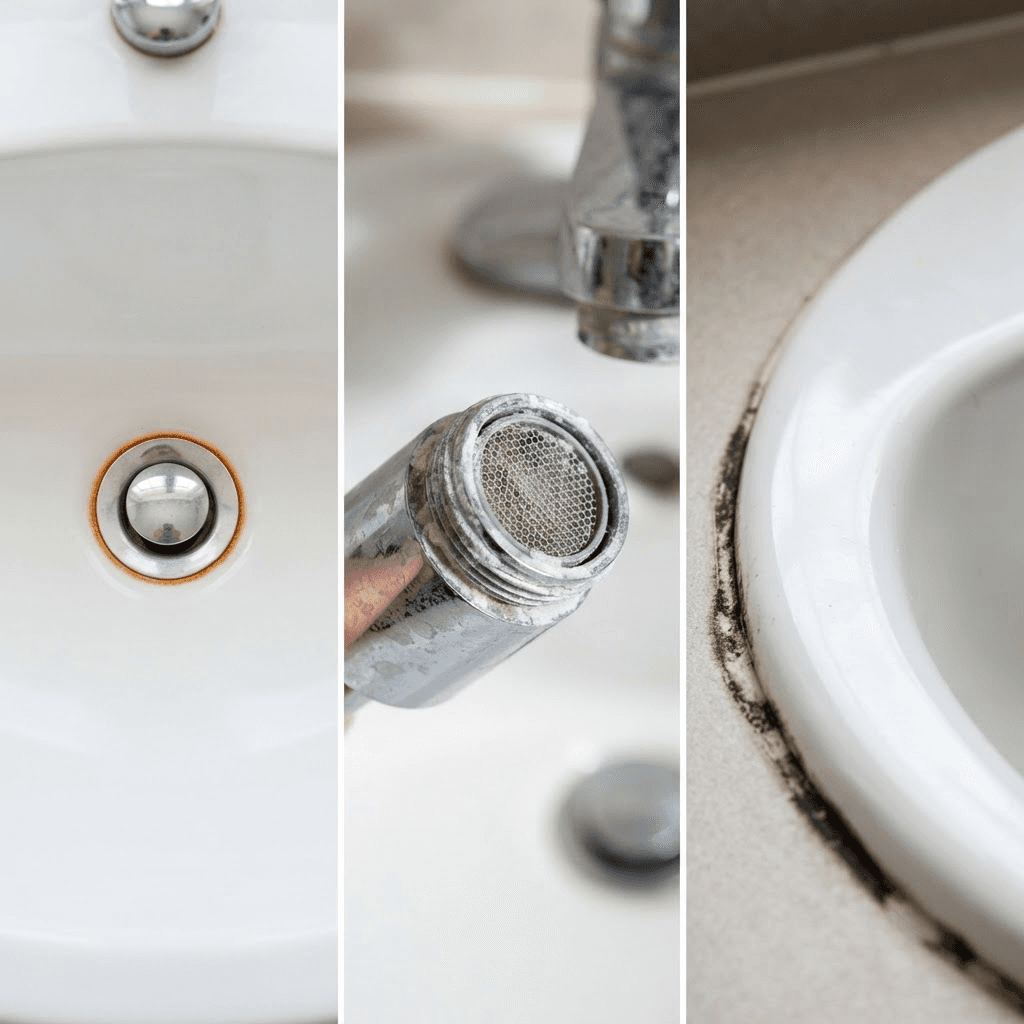
They can reveal a pattern
Where the stain appears, how quickly it returns, and whether it shows up on laundry or only one fixture can help narrow the questions for a laboratory or plumber.
They cannot measure safety
Lead, nitrate, arsenic, and many bacteria do not announce themselves with a convenient color. A stain-free glass can still need testing, especially for private wells.
Clean the spot, then investigate the source
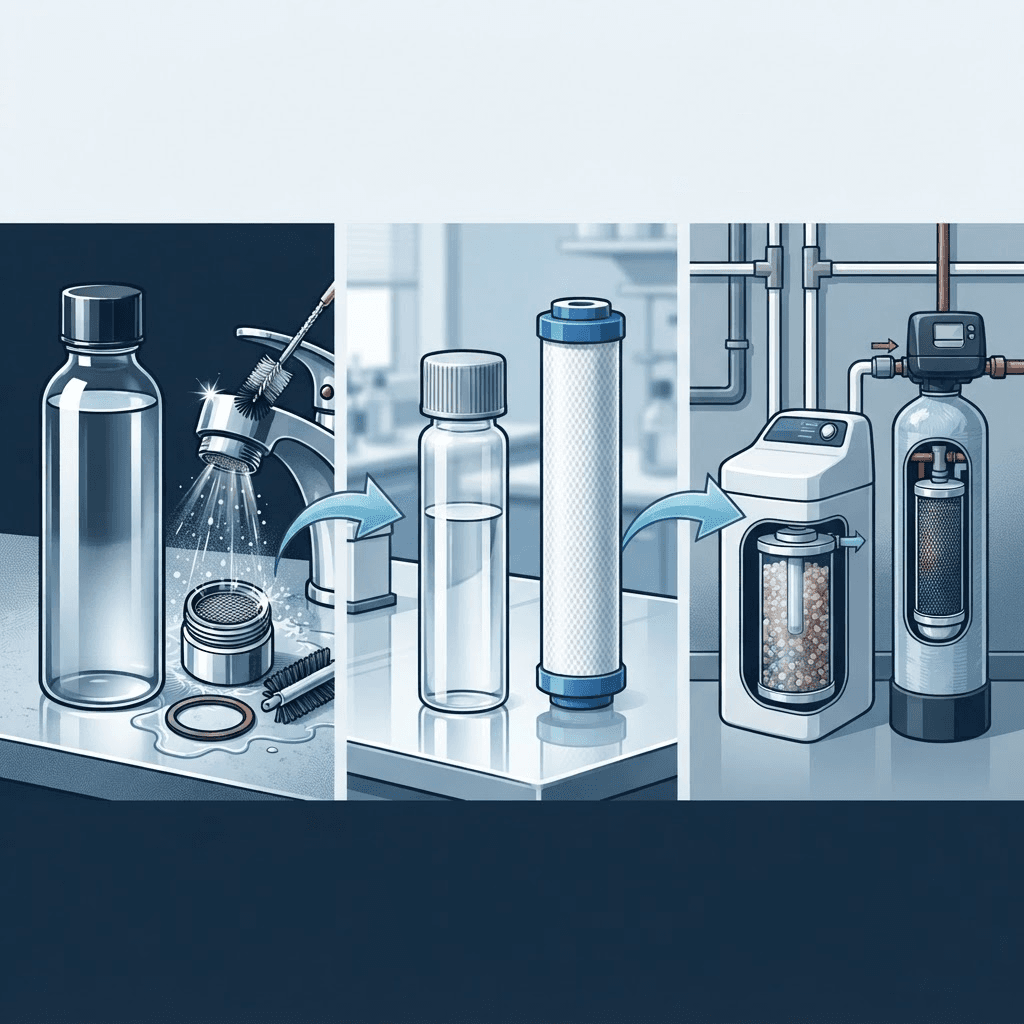
Cleaning can make a bathroom feel victorious for about eleven minutes. It is still useful—but it should be paired with the right question. For a small mineral deposit on a removable aerator or showerhead, soaking the part in distilled white vinegar can loosen calcium scale. Rinse thoroughly and follow the fixture manufacturer's instructions.
Iron and manganese stains often return unless the underlying water is treated with equipment matched to the concentration and chemistry. Hardness may call for a softener; iron or manganese may call for oxidation and filtration; corrosive water may require pH adjustment or plumbing work. Algae or suspected bacterial growth in a tank or well system calls for cleaning, disinfection, inspection, and testing—not just a stronger bathroom cleaner.
Never mix bleach with acids, ammonia, or other cleaners. If a stain is recurring, spreading, slimy, accompanied by an odor, or paired with plumbing leaks, pause the chemistry experiment and get the water tested.
What should you test for?
The right panel depends on the stain and the source. A residential water sample may include hardness, calcium, iron, manganese, pH, copper, total dissolved solids, and bacteria testing. Private-well owners may also need routine coliform and nitrate testing, even when the water looks completely normal.
Explore residential water testing