Lead in Drinking Water: What Oregon Homeowners Should Know
Lead is a toxic metal that can enter drinking water from household plumbing. Learn why it matters, what to know in the Willamette Valley, and how an accredited laboratory tests for it.
5 min read · Waterlab Corp Laboratory Staff
There is no known safe level of lead exposure. Testing is the only way to know whether lead is entering your water at the tap.
The short answer
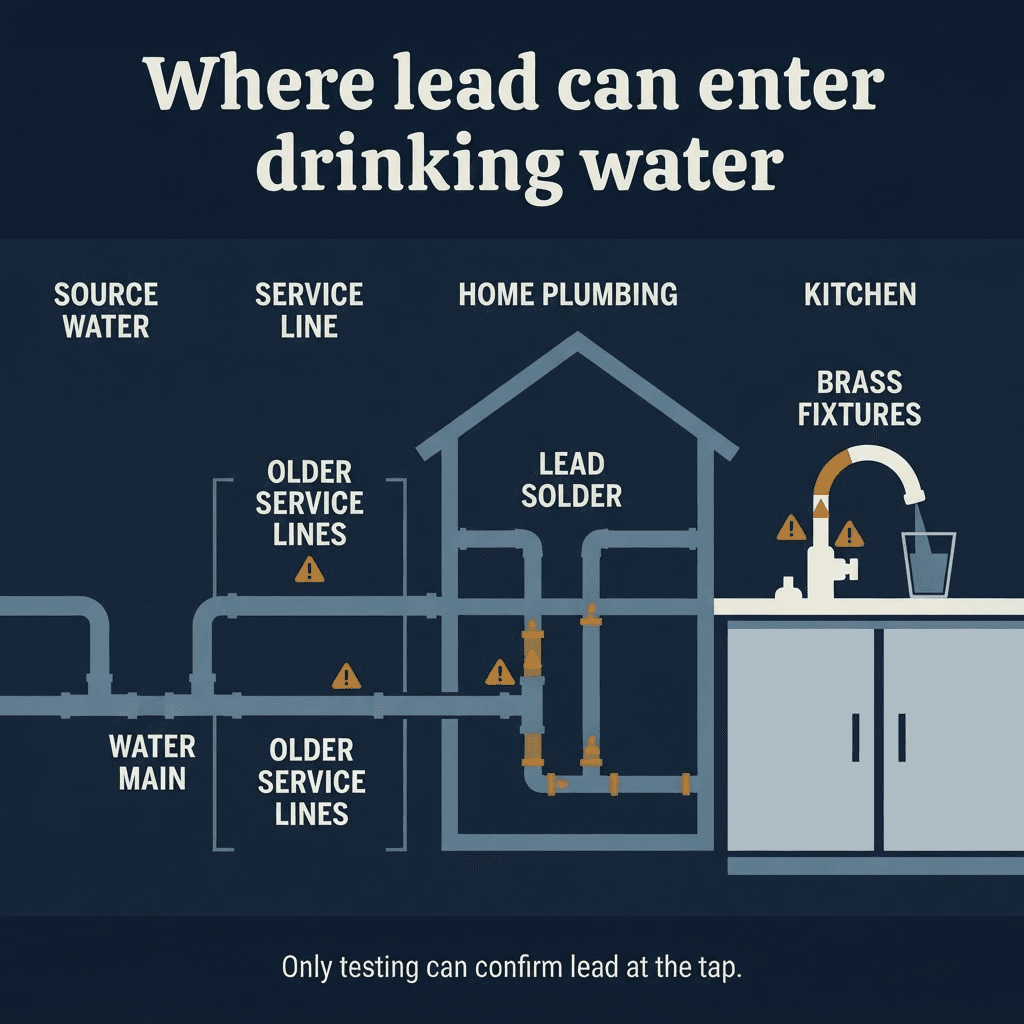
Lead usually comes from plumbing, not the river or aquifer.
Lead can dissolve into water as it moves through older service lines, lead-based solder, brass fixtures, or other plumbing components. The water leaving a treatment plant or coming from a private well may contain little or no lead, yet the water at your kitchen tap can still be affected by the materials in the home.
Why lead is harmful
Lead can affect the nervous system and development. Children, infants, and fetuses are especially vulnerable, but lead exposure can harm adults too. It can build up in the body over time, so preventing exposure matters.
Why a visual check is not enough
Clear water, normal taste, and an updated filter do not prove that lead is absent. Lead is invisible and tasteless at concentrations that can still be important.

Lead in the Willamette Valley
Across the Willamette Valley, the most useful question is often not whether the valley itself contains lead, but whether a home, business, or private-well system has plumbing that can contribute lead at the tap. Older homes, older service connections, and brass fixtures deserve extra attention. Municipal water customers should check their provider's information about corrosion control, while private-well owners are responsible for testing water from their own taps.
Seasonal changes, plumbing work, changes in water chemistry, or a long period without use can also change what a tap sample shows. A local laboratory can help you choose the sample type and collection instructions that fit the question you are trying to answer.
How Waterlab tests for lead
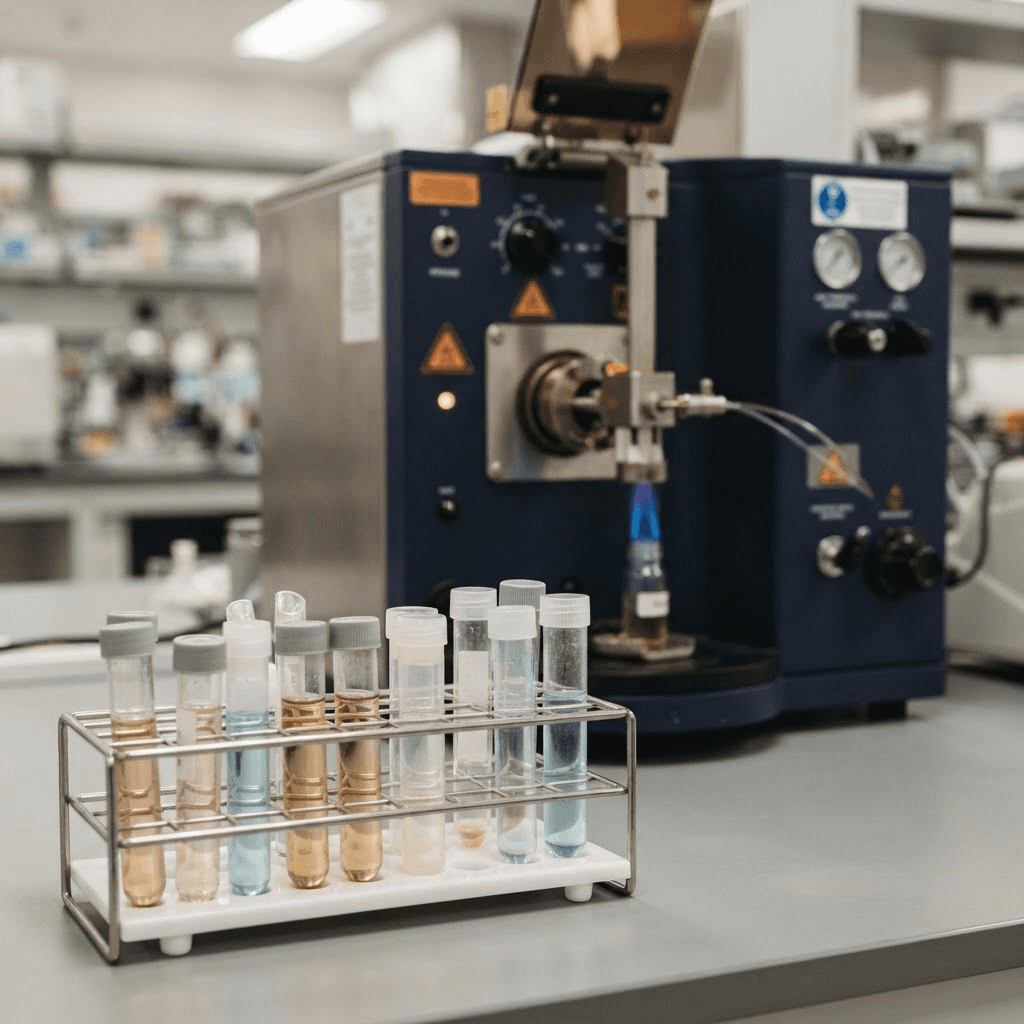
Lead testing starts with the right sample. Waterlab provides a laboratory bottle and collection instructions so the sample represents the question you want answered. For a first-draw sample, the water sits unused for a specified period before collection. In some situations, a running-water sample or a paired first-draw and running sample can help distinguish household plumbing from a source or service-line concern.
In the lab, the sample is preserved, prepared, and analyzed using an accredited metals procedure. Results are reported in micrograms per liter, which is equivalent to parts per billion. Our staff can explain what the result means, whether follow-up sampling makes sense, and what information to share with a plumber or water-treatment professional.
A laboratory result does not diagnose a person or replace medical advice. If you are concerned about a child's exposure, contact a healthcare professional or your local public-health authority.
Want to test your residential water?
If you own a home or private well in Salem, the Willamette Valley, or surrounding Oregon communities, start with our residential testing options. We can help you decide whether lead testing belongs in a broader drinking-water panel or should be ordered on its own.
View residential lead testing options